
Structured activities build completion habits, not conversation. Here is why the drills, games, and worksheets you rely on are training the wrong skill entirely.
The common assumption among adult individual learners at the beginner stage is that if they just do enough structured English learning activities, the right games, the right drills, the right worksheets, they will eventually become fluent and conversational. But finishing a worksheet proves you finished a worksheet. It does not prove you can speak. That gap, between measurable activity completion and real conversational ability, is the structural problem sitting underneath every "I've studied for months but still freeze" frustration that adult English learners know all too well. Understanding why it exists is the first step toward closing it, and it has nothing to do with effort.
"Learners at A2/B1 level feel stuck in conversation despite having studied English formally, suggesting classroom or paper-based learning hasn't translated to real speaking ability."
— what we hear from adult English language learners

The brain processes structured drills and live conversation through different mechanisms. What most learners and educators consistently find is that completing structured English learning activities builds passive recognition of language patterns but does not develop the spontaneous retrieval and real-time processing that live conversation demands. You can recognize the correct answer on a multiple-choice grammar exercise without being able to produce anything close to it under the pressure of a real exchange. Recognition and retrieval are not the same skill. Drilling one does not train the other.
Drilling one does not train the other.
Activity completion feels productive because it produces visible output: finished exercises, correct answers, maintained streaks. Across the broader learning landscape, that sense of accomplishment is structurally decoupled from the spontaneous, unpredictable demands of real conversation, reinforcing the false belief that enough activities will eventually produce fluency. They won't. Drills rehearse controlled conditions. Conversation never is.
Gamified formats compound this. What most teams building and studying these platforms report is that gamified platforms create a feeling of progress without producing meaningful conversational carry-over, leaving learners who invest real time in them still unable to hold a spoken exchange. The metric being optimized is completion. Fluency is a different target entirely.
Most structured learning formats were designed for classrooms, not for someone with twelve free minutes between a meeting and school pickup. Learners start strong, miss sessions when life accelerates, and quietly abandon the format, not because they stopped caring, but because it demanded conditions that were never realistic. A format requiring 30 uninterrupted minutes to deliver value will fail most adult learners structurally, regardless of how well-designed the activities inside it are.
This is where Parrot addresses something the activity-sheet model ignores entirely: the brain acquires conversational language through meaningful, comprehensible exposure consumed consistently, not through task completion in ideal conditions. For busy adult learners, short-form video consistently outperforms longer study blocks on one practical metric: completion, because a format that fits a ten-minute commute gets opened far more often than one that demands a half-hour window that rarely arrives.
The entire category-rotation model most learners follow is optimized for the wrong outcome. The next section names exactly what that habit is quietly costing you.
Key takeaways
Finishing a worksheet proves you finished a worksheet, it does not prove you can speak, and that gap is the core problem with most English learning activity lists.
Rotating through skill categories (speaking Monday, grammar Tuesday, listening Wednesday) feels balanced but trains completion, not fluency.
The freeze response in real conversation isn't a vocabulary problem, it's what happens when every activity you've practiced felt like a test.
Retained vocabulary and retrievable vocabulary are two different things; a perfect quiz score means nothing when a native speaker uses that word in an unexpected sentence.
Comprehensible, emotionally engaging input in a low-anxiety state drives acquisition faster than any structured drill format, the research on this is not ambiguous.
Matching activity to proficiency level isn't a nice-to-have: handing a beginner a debate prompt or an advanced learner a picture-card actively stalls acquisition by spiking the affective filter.
Past a certain ceiling, piling on more structured activities produces diminishing returns, the Krashen Input Hypothesis explains why: acquisition requires messages just beyond current ability, not surface-feature repetition.
Parrot closes that gap by delivering short-form, comprehensible video input in Spanish (French, English, and Italian coming soon), the same scroll habit that already fills your phone, redirected toward the one method research consistently backs.
The Hidden Cost of Rotating Through Activity Categories Without a Fluency Goal
It is one of the most widespread assumptions in language learning, and it is exactly what makes the category-rotation model so appealing, and so misleading.
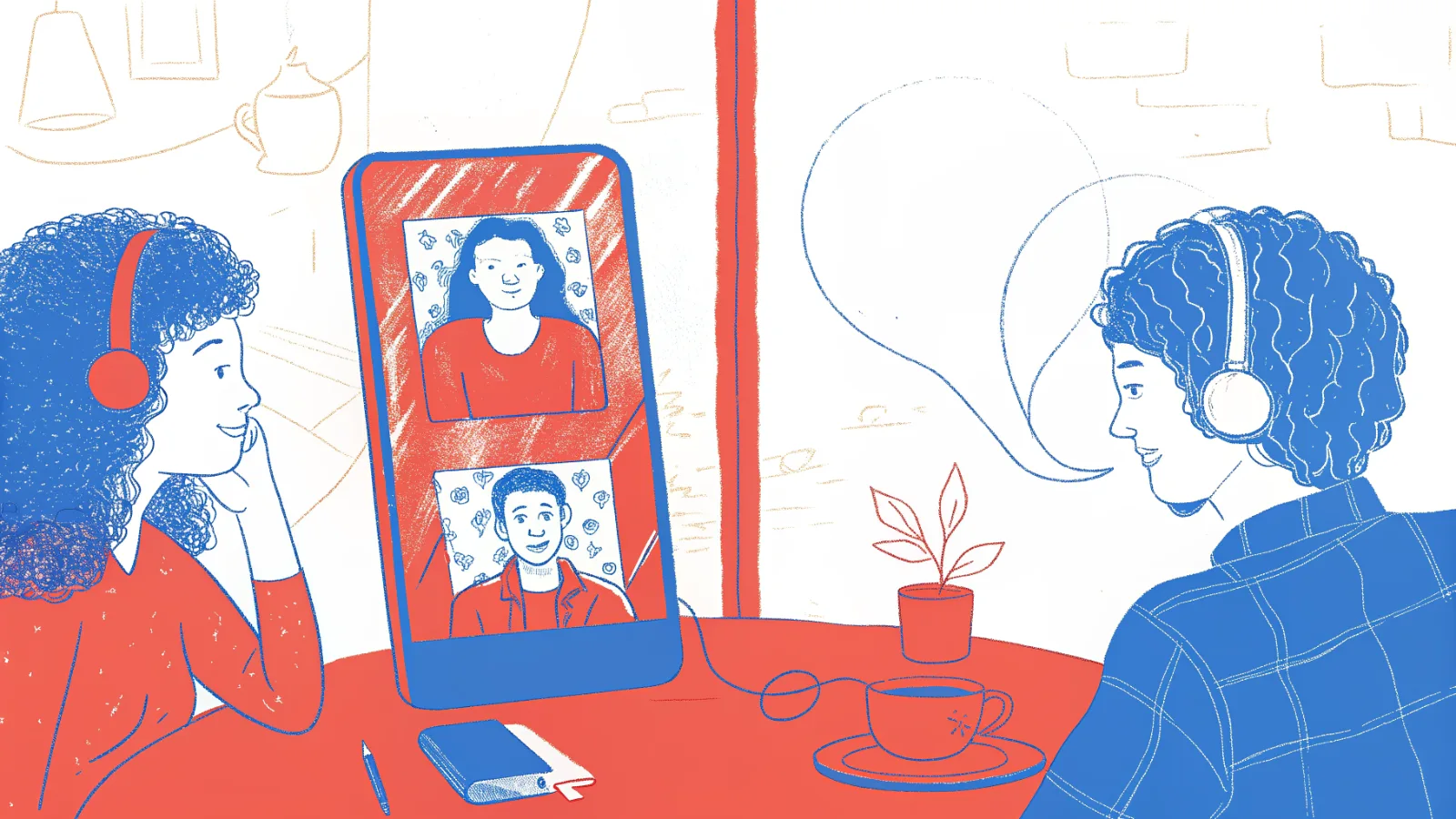
Why Rotating Through Skill Categories Builds Completion Metrics Instead of Conversation Ability
After cycling through apps, passive video input, language exchanges, gaming sessions, YouTube, music, reading, and cooking videos, sometimes all of them at once, without a clear fluency goal anchoring any of it, the result is not progress.
Busy adult learners typically cannot carve out the 20-30 minute structured study blocks that most activity-based resources are designed around, making those resources feel impractical before the learner even begins.
20-30 min
Study blocks most adult learners can't find
The One Thing Category Rotation Misses - Getting Comprehensible Input at Your Level
According to Krashen's Theory of Second Language Acquisition, language is acquired in only one way: when we understand messages. They do not feed the subconscious process that produces fluent, spontaneous speech.
Krashen's acquisition-versus-learning distinction is the critical mechanism category rotation bypasses. Only acquired competence drives real conversation; consciously learned rules cannot be converted into acquisition no matter how many structured activities are completed. Worse, Krashen's Affective Filter Hypothesis shows that anxiety from drill-heavy rotations raises a mental barrier that actively blocks input from reaching the language acquisition device.
Parrot addresses this mismatch directly through the Comprehensible Input Method, which underlies every video session and governs how content is selected and sequenced for each learner. The process begins with the level being set from the learner's onboarding answers plus a short placement test (5 minutes or less), so rather than hunting for the right level across a disconnected rotation of apps and activities, learners encounter level-appropriate content immediately. That short-form video feed delivers compelling, comprehensible input matched to where the learner actually is, with the explicit goal of breaking through the intermediate plateau and reaching conversational fluency rather than accumulating completion streaks.
For learners who want active practice on top of immersive video content, Parrot's AI Spanish Tutor and Parrot Back speaking practice are available during or after video sessions, providing personalized feedback and targeted practice the moment a learner wants to move beyond passive watching.
The good news: many of the activities you already know, and the 71 covered in this guide, can be rescued from the category-rotation trap the moment you understand what makes any activity actually work.
Related Reading
How To Learn English
How To Learn English Grammar Step By Step
English Language Learning Methods
Where Should I Start If I Want To Learn English?
How To Speak English Fluently And Confidently
Is Learning English Hard
English For Tourism
How To Improve English Speaking Skills
How To Improve English Vocabulary
How To Improve English Pronunciation
Best Online English Courses
What Speaking and Conversation Activities Help Practice English?
Speaking activities work best when they stop feeling like a test. That sounds obvious until you watch a confident adult learner go completely silent the moment a native speaker asks a follow-up question they didn't rehearse. The problem is the freeze response, and most speaking activities accidentally train it harder.
Stephen Krashen's affective filter hypothesis, supported by decades of acquisition research, identifies anxiety as the primary brake on language output. When the filter is high, input stops converting into usable language. The activities below are ranked and structured specifically to keep that filter low, which means they prioritize finishing imperfect sentences over producing perfect ones. That distinction matters more than the activity format itself.
A pattern worth naming early: many learners at B1–B2 level find themselves stuck in a loop, shadowing podcasts, completing app drills, repeating sentence frames, without seeing any clear, measurable improvement the moment a real conversation begins. The gap is the difference between rehearsed output and exposure to genuine, unpredictable native-speaker speech. Even learners whose reading, writing, and comprehension are relatively strong can hit this wall, because fluent speaking draws on a different kind of readiness: the kind that comes from having heard real language often enough that it feels familiar before you ever have to produce it.
That's where Parrot's short-form video feed closes the gap. Built on the Comprehensible Input Method, which governs how content is selected and sequenced for each learner, it floods the learner's input channel with real native-speaker Spanish at a level they can actually absorb. Every video watched contributes to listening practice immediately, so when a learner steps into a roleplay or a live conversation, the language already feels familiar rather than foreign. A placement test at the start means the content sequencing is calibrated to where each learner actually is, not where they think they should be.
The 20 activities below span classroom, online, and solo formats. Each entry names what it trains, who it suits best, and the one real tradeoff worth knowing before you build a lesson or a study session around it.
1. Two Truths and a Lie - Low-Stakes Personal Narrative Speaking
Each speaker shares two true statements and one false statement about themselves, and the group guesses the lie. This works for both children and adults because the content is personally owned, which lowers the affective filter immediately. It trains narrative fluency and spontaneous listening response. The tradeoff: it's a one-shot format, so it burns quickly in small groups and needs a rotation plan to stay useful beyond the first session.
2. Hot Seat Vocabulary Relay - Real-Time Word Retrieval Under Friendly Pressure
One student sits with their back to the board while teammates describe a written word without saying it. The seated learner guesses from the descriptions alone. This is one of the most effective no-materials classroom ESL activity ideas because it forces real-time word retrieval under mild social pressure, which mirrors actual conversation demands. The limitation is that it rewards learners who already have strong vocabulary, so beginners need simpler word sets to stay engaged rather than frustrated.
3. Restaurant Ordering Roleplay - Authentic Food Service Conversation Practice
Research on roleplay in adult ESL contexts consistently shows that scenario-based practice produces measurable real-world transfer when the scenario matches a situation learners actually face. Restaurant ordering qualifies: it has predictable turn structure, a defined vocabulary set, and a clear goal. It trains polite request forms, number handling, and clarification phrases. The tradeoff is that scripted versions kill the benefit. The roleplay only builds fluency when the server role is allowed to improvise, forcing the ordering learner to handle unexpected responses.
4. Asking for Directions Roleplay - Navigation Language in Simulated Street Contexts
This conversation activity for ESL learners pairs spatial vocabulary (turn left, go past, on the corner) with functional urgency. A simple hand-drawn map as a prop is enough to run it with zero materials cost. It trains prepositions of place, sequencing language, and the ability to ask for clarification politely. The honest limitation: it's a narrow register. Learners who only practice this scenario can handle directions fluently but still struggle in open-ended conversations, so it works best as one rotation in a broader session rather than a standalone activity.
5. Job Interview Roleplay - Professional English Speaking Simulation
Scenario-based roleplay in professional contexts produces stronger real-world speaking transfer than open-ended conversation practice, according to research on adult ESL learners cited in the TESOL Quarterly. The job interview format is particularly high-ROI because it trains formal register, self-presentation language, and the ability to hold a structured turn for 30 to 60 seconds without trailing off. The tradeoff: it raises the affective filter for anxious learners. Run it in pairs before any whole-class format to keep the stakes low enough to produce output.
6. Doctor's Appointment Roleplay - Health Vocabulary in a Functional Context
This scenario trains one of the most consequential vocabulary sets an adult learner needs: symptoms, body parts, time expressions ("it started three days ago"), and the ability to describe intensity. It works for both children and adults, though adult beginner ESL learners tend to engage more seriously because the stakes feel real. The limitation is emotional: some learners find health topics anxiety-inducing rather than motivating. Offering an alternative scenario (pharmacy, school nurse) keeps the functional vocabulary intact while reducing personal discomfort.
7. Picture Description Pair Activity - No-Materials Observation and Speaking Practice
One partner describes a picture while the other listens and asks clarifying questions, then they swap. Any image works, including a phone screen, a textbook illustration, or a printed photo. This is a reliable no-materials ESL activity idea because the cognitive load sits on observation and description rather than memory retrieval. It trains present tense narration, spatial language, and question formation. The tradeoff: without a structured follow-up task (draw what you heard, spot the difference), it can become passive listening rather than active speaking practice.
8. Find Someone Who - Beginner-Friendly Whole-Class Mingling Activity
Learners receive a grid of prompts ("find someone who has visited another country") and must ask classmates yes/no or short-answer questions until they fill the grid. This is one of the most effective beginner ESL stress-free games because the question structure is predictable, which lowers anxiety enough for genuine output. It also generates natural repetition without feeling repetitive. The limitation: it works best in groups of 12 or more. In small classes, learners exhaust the grid quickly and the activity loses its momentum.
9. Story Chain - Collaborative Oral Narrative Building Without Materials
One learner begins a story with a single sentence. The next adds a sentence. The chain continues until the story reaches a natural or deliberately absurd conclusion. This is a genuine zero-prep English speaking practice activity that trains connective language (then, suddenly, however), tense consistency, and the ability to build on someone else's idea without rehearsal. The key tradeoff: it rewards creative risk-taking, which means quieter learners often pass or produce minimal contributions unless the facilitator sets a minimum sentence length.
10. Debate and Opinion Sharing - Structured Argumentation for Intermediate Learners
Assign two learners opposing positions on a low-stakes topic ("should school uniforms be required?") and give them two minutes to argue their side. This trains opinion language, hedging expressions, and the ability to hold a position under pushback. It's most effective for intermediate learners who already have enough vocabulary to sustain a turn but need practice producing extended output. The honest limitation: it raises the affective filter significantly for anxious speakers. Pair debate before group debate, always.
11. Information Gap Activity - Pair-Based Speaking With Complementary Data Sets
Each partner holds information the other needs, and they must speak to fill the gap. Classic formats include split schedules, incomplete maps, and half-finished charts. This is one of the most research-supported conversation activities for ESL learners because the communicative need is genuine: silence means the task fails. It trains question formation, clarification requests, and the ability to describe abstract data verbally. The tradeoff is preparation time. Teachers need to create or source matched materials, which makes it less spontaneous than other formats on this list.
12. Show and Tell - Personal Object Presentation for Beginner Speaking Confidence
Each learner brings one object and speaks about it for 60 to 90 seconds: what it is, where it came from, why it matters. Because the content is personally owned, the affective filter drops and output increases. This is a strong first-week classroom ESL activity idea for adult beginners who find open-ended prompts overwhelming. The limitation is that it trains monologue rather than conversation. Pair it with a structured question round (two questions from the audience) to build the interactive dimension that monologue practice alone can't develop.
13. Duolingo English Practice Mode - Gamified Online Speaking Micro-Tasks
The speaking features inside gamified language apps offer low-stakes repetition for pronunciation and sentence-level production. They're accessible, require no partner, and fit into five-minute gaps. Duolingo's speaking features are genuinely accessible: they require no partner, fit into five-minute gaps, and the platform's gamified structure has helped millions of learners build a consistent daily habit, which is itself a significant achievement. The honest tradeoff is that the speaking prompts are narrow, feedback focuses on phoneme matching rather than meaning, and completion metrics measure engagement rather than conversational readiness. Most beneficial as a warm-up before a live speaking task, or as an on-ramp habit-builder for learners who are just starting out.
14. Cambly and iTalki - Live Online Conversation Practice With Native Speakers
The online English tutoring market has scaled significantly, with platforms like iTalki connecting learners to thousands of community tutors and professional teachers for on-demand conversation sessions. This is the highest-authenticity option on this list: real native speakers, real accents, real speed. It trains listening comprehension and speaking simultaneously in a way that no classroom simulation can replicate.
The tradeoff is cost and commitment. Unstructured sessions with unprepared tutors can feel like expensive small talk. Learners get the most from these platforms when they arrive with a specific topic or scenario in mind.
15. Flipgrid Video Response Activity - Asynchronous Online Speaking for Classrooms
Learners record a short video response to a prompt and post it to a shared class feed. Peers respond with their own video comments. This format removes the real-time pressure of live speaking while still requiring genuine oral production. It's particularly effective for anxious adult learners who need processing time before they can produce fluent output. The limitation: it doesn't train the real-time listening and response loop that live conversation requires. Treat it as confidence scaffolding, not a replacement for synchronous speaking practice.
16. Podcast Shadowing Practice - Online Listening-to-Speaking Transfer Activity
The learner listens to a short podcast segment, then repeats the audio line by line, matching the speaker's rhythm, intonation, and pacing. Merrill Swain's output hypothesis positions this kind of pushed production as a distinct acquisition mechanism from input alone: learners notice gaps in their own phonological system when they attempt to reproduce native-speaker speech. The tradeoff is that shadowing is cognitively demanding and demotivating when the source audio is too fast or too accent-dense.
Slow, clear speech at the learner's comprehension level is the non-negotiable starting condition. Parrot's short-form video feed is designed around exactly this principle. The Comprehensible Input Method sequences content so the native-speaker speech a learner encounters is pitched at a level they can absorb, which makes it a practical source library for shadowing practice rather than a source of frustration.
17. Speed Friending - Timed Pair Rotation for Rapid Conversation Practice
Pairs sit facing each other and speak on a prompt. A signal sounds, one row rotates, and the new pair gets a fresh prompt. This is a high-energy classroom ESL activity idea that generates more speaking turns per learner per minute than almost any other format. It trains the ability to start a conversation quickly and sustain it without long planning time. The limitation: the rotation speed means learners rarely develop a topic past surface level. It builds initiation fluency rather than depth, so it works best early in a unit rather than as a consolidation activity.
18. Taboo Card Game Adaptation - No-Prep Vocabulary Description Speaking Activity
One learner must describe a target word without using five related words listed on the card. In a no-prep version, the teacher calls out a word and banned words verbally, and the speaker improvises. This is one of the most effective no-materials ESL activity ideas for intermediate learners because it forces circumlocution, which is exactly the skill that keeps a real conversation moving when a word retrieval fails. The tradeoff: it's harder to run with beginners who don't yet have enough vocabulary to describe around a gap.
19. Would You Rather - Opinion Justification Speaking Activity With Zero Materials
The facilitator poses a forced-choice dilemma ("would you rather speak five languages badly or one language perfectly?") and each learner must justify their answer in two to three sentences. This trains opinion language, conditional structures, and the ability to hold a position when challenged. It requires zero materials and works across levels by adjusting the complexity of the dilemma. The honest limitation is that it can become formulaic quickly. Rotate the format by requiring learners to argue the opposite of their genuine preference, which forces more complex language production.
20. English Conversation Exchange Apps - Tandem and HelloTalk for Peer Online Practice
Apps that match language learners for text, audio, and video exchange give adult learners access to English-speaking partners at no cost. The peer dynamic lowers the affective filter compared to a professional tutor session because both participants are learners in some language. The tradeoff is consistency: partner matching is unpredictable, sessions depend on mutual availability, and many exchanges drift into text chat rather than actual speaking practice. Most beneficial when the learner commits to a regular video call schedule with a specific partner rather than browsing for new connections each session.
Speaking activities give you the rehearsal space, but rehearsal only compounds when you have a deep enough vocabulary reservoir to draw from in real time. For learners who want to build that reservoir through content from real native speakers, including those who want to communicate more easily with Spanish-speaking family members, Parrot's Parrot Back speaking practice feature and speaking activities with pronunciation scoring are most beneficial when layered on top of the immersive video input, not used as a substitute for it. The next section covers the vocabulary and grammar games that build exactly that reservoir, and reveals which popular game formats actually short-circuit retention by rewarding letter patterns over meaning.
What Vocabulary and Grammar Games Are Effective for English Learners?
Retained vocabulary and retrievable vocabulary are two different things. A learner can score perfectly on a word-matching quiz, then freeze the moment a native speaker uses that same word in an unexpected sentence. According to industry research, game-based vocabulary learning promotes retention by creating emotional and contextual associations with words, so recall proves more durable than rote memorization or decontextualized drills. The catch: that retention advantage disappears the moment a learner faces live, unpredictable conversation, because most games still reward pattern-matching within a scripted task rather than spontaneous retrieval under real pressure.
A second gap compounds the first. Many popular vocabulary games, including off-the-shelf apps like Heads Up, do not support custom vocabulary lists, so the words a learner drills in a game session rarely match the words they are actively studying. That mismatch slows progress: learners review generic vocabulary instead of reinforcing the specific forms they need to move forward. And even when the right words do appear in a game, knowing a word and applying it correctly in context are entirely different skills. Learners regularly discover they can recognize vocabulary in a matching exercise but cannot produce it accurately inside a real sentence, especially when verb conjugations and grammatical structure shift the form they memorized.
The games below are ranked by how hard they force meaning-in-context retrieval, which is the mechanism that actually moves words from short-term recognition into long-term use. Fun matters, but it is necessary rather than sufficient. The acquisition accelerator is whether the mechanic connects form to meaning under communicative pressure.
1. Board Race - Relay Writing Vocabulary Sprint for Teams
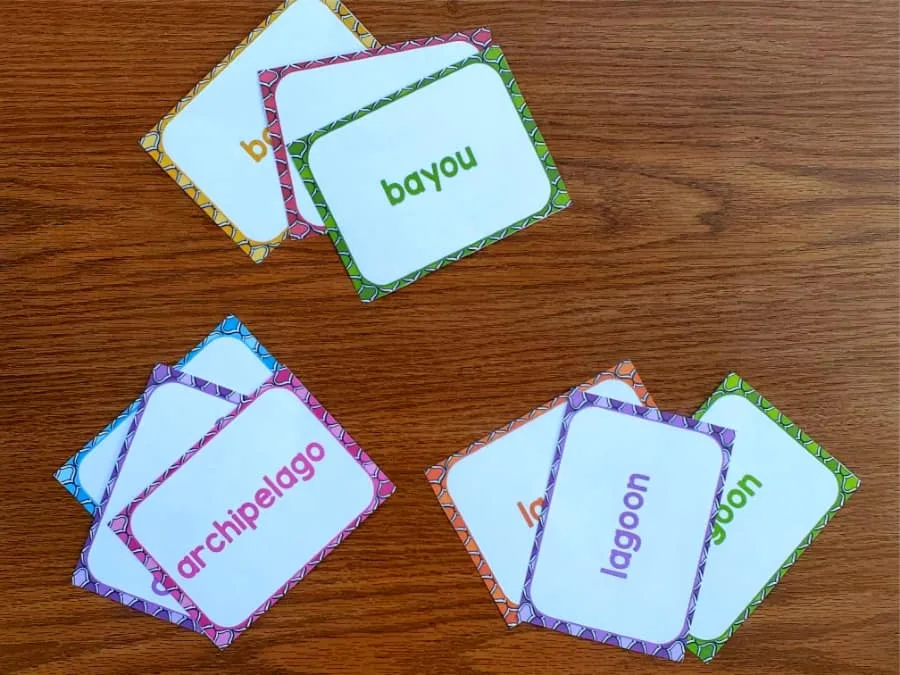
Board Race is one of the strongest vocabulary games for ESL classrooms because it pairs physical urgency with active recall. Teams divide, and one player at a time sprints to the whiteboard to write a word in a given category before tagging the next teammate. The kinetic pressure forces genuine retrieval rather than recognition, and the team format adds communicative stakes. Adapt it for online classrooms using a shared Jamboard or Miro board. The tradeoff: it needs a minimum of six learners and a teacher to call categories, so solo learners cannot replicate it independently.
2. Paper Pictionary - Drawing-to-Word Association Without Translation
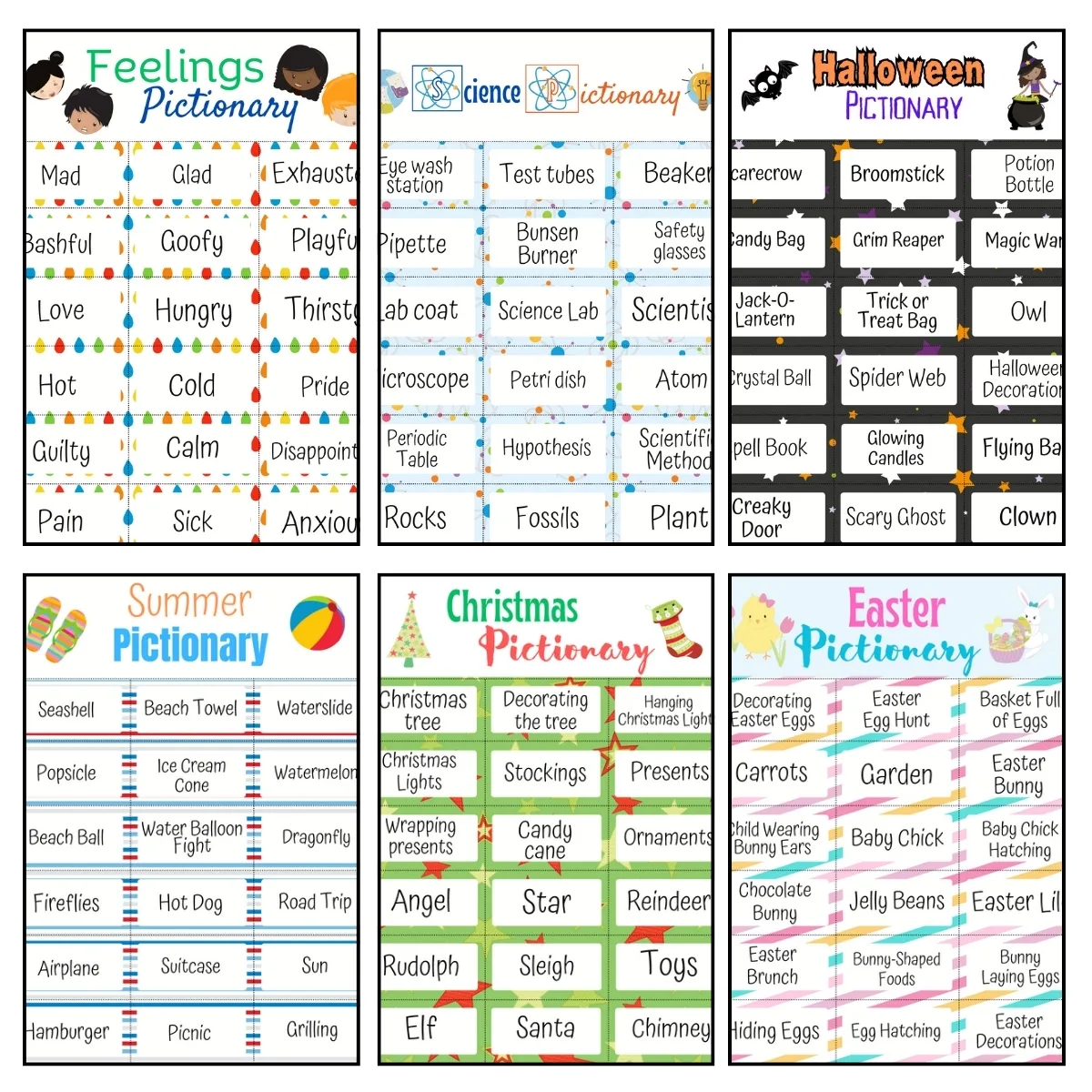
Industry research found that visual association techniques help learners bypass first-language translation, building direct form-meaning links in the target language. Paper Pictionary delivers exactly that mechanic: one player draws a concept, and teammates guess in English only. It works on paper or digitally, costs nothing, and suits beginner to intermediate levels. The limitation is that abstract or grammatical vocabulary (conjunctions, modal verbs) is nearly impossible to draw, so it works best as a concrete noun and action verb tool rather than a full grammar game.
3. Word Jumble (Sentence Scramble) - Reassembling Cut-Up Sentences for Grammar
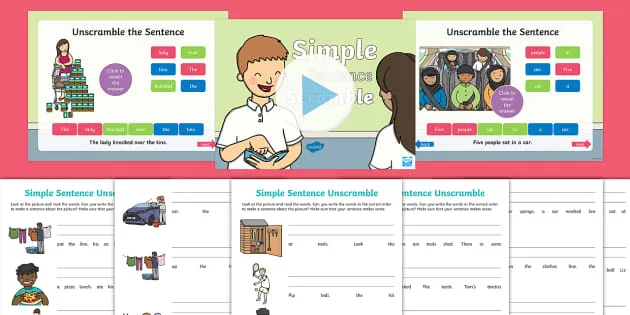
Word Jumble involves cutting up printed sentences and asking learners to reassemble them in correct grammatical order, forcing active engagement with syntax rather than passive recognition. It is one of the clearest grammar activities for English learners because the task has one right answer, giving immediate feedback. Print a set, cut the strips, and it becomes a zero-cost classroom activity. The tradeoff: it works best as a consolidation tool for grammar structures already introduced, not as a first-exposure activity, and it does not develop spontaneous production.
4. Scrabble - Self-Directed Vocabulary Depth Game for Independent Learners
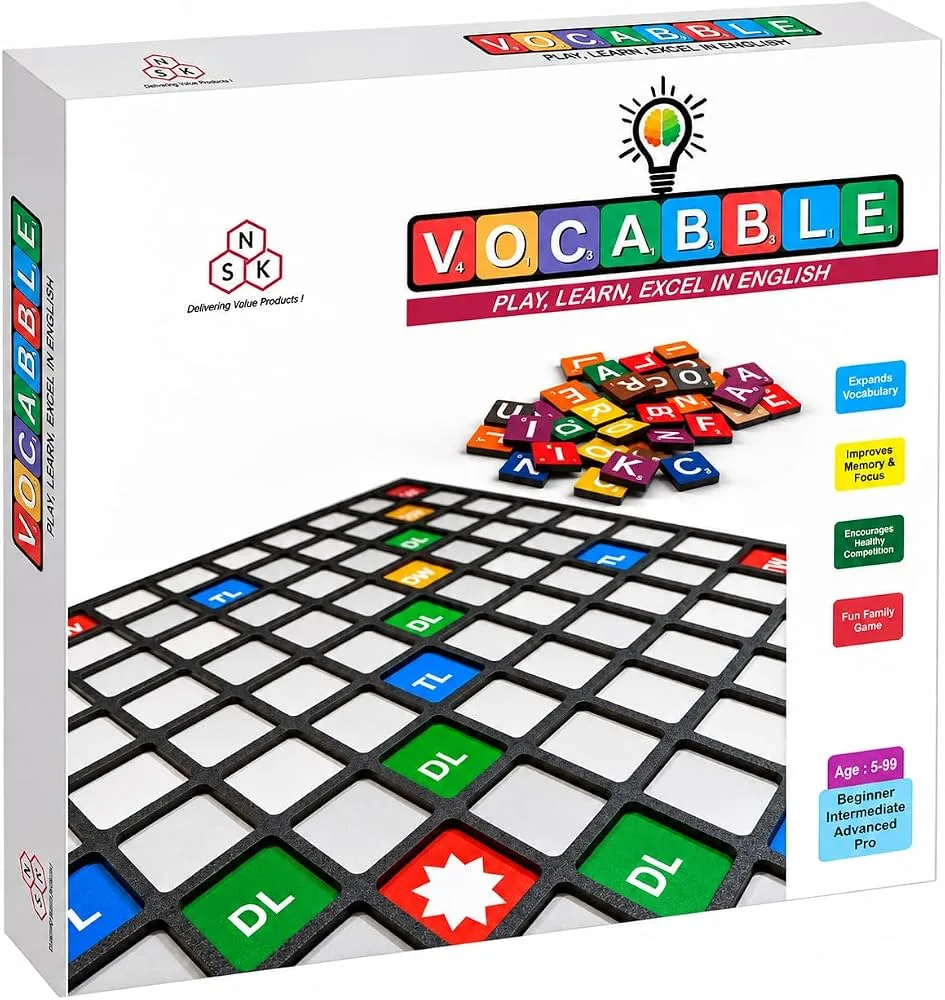
Scrabble rewards letter-pattern recognition more than meaning, which is its core limitation as a vocabulary acquisition tool. Learners can score points by placing obscure two-letter combinations without knowing what those combinations mean in context. It has genuine value for independent learners who want to deepen spelling awareness and explore low-frequency vocabulary with a dictionary open, but that requires deliberate self-discipline most casual players skip. Best used as a supplementary free English learning resource for advanced learners, not as a primary vocabulary game for ESL beginners or intermediates.
5. Scattergories - Timed Category-Naming Game for Vocabulary Breadth
Scattergories asks players to name items in a category starting with a specific letter, under a time limit. That timed pressure is the key mechanism: it forces rapid lexical retrieval across a broad category rather than recognition of pre-taught words. Played asynchronously in a WhatsApp group, it becomes a zero-prep daily vocabulary habit requiring no materials and no teacher. The limitation is that it tests breadth rather than depth; learners produce words they already know rather than acquiring new ones, so it is a fluency activator rather than an acquisition driver.
6. Wordwall Online Game Builder - Digital ESL Vocabulary and Grammar Games
Wordwall lets teachers build custom digital games (matching, anagram, quiz, spin the wheel) from their own vocabulary lists, which solves a real classroom frustration: most off-the-shelf vocabulary games for ESL use generic word sets that don't match what learners are currently studying. The platform is widely used by ESL teachers globally and supports both live classroom play and self-paced homework assignments. The tradeoff is that the free tier limits the number of active games, and the highest-retention game formats (those requiring sentence-level production) are harder to build than simple matching activities.
7. Duck English Grammar Games - Free Online Sentence-Building ESL Activities
Duck English offers free online sentence-building activities structured around grammar targets, making it one of the more accessible free English learning resources for self-study learners who want structured practice without a teacher. The sentence-building format is stronger than pure gap-fill because it requires learners to produce word order rather than select from options. Best suited to beginner and lower-intermediate learners consolidating basic clause structures. The limitation: the game mechanics are relatively simple, and intermediate to advanced learners will outgrow the challenge level quickly.
8. ISL Collective Board Game Printables - Printable ESL Grammar and Vocabulary Games
ISL Collective hosts a large library of printable board games designed by ESL teachers, covering grammar and vocabulary targets across levels. The community-sourced model means the quality varies, but the volume is high enough that teachers can find targeted materials for almost any grammar point. For learners without consistent classroom access, printable board games are a practical way to run structured vocabulary games for ESL with a study partner at home. The tradeoff is that print-and-play requires preparation time, and the games work best with two or more players rather than solo.
9. Taboo - Circumlocution Card Game That Builds Descriptive Vocabulary
Taboo is one of the highest-yield grammar activities for English learners at intermediate to advanced levels because it forces circumlocution: a player must describe a target word without using the five most obvious related words on the card. That constraint demands flexible, spontaneous language production rather than rehearsed recall. Circumlocution is a documented fluency strategy, and the communicative pressure Taboo creates mirrors real conversational demands more closely than almost any other classroom game. The tradeoff: it requires a minimum vocabulary base to play meaningfully, so it is not effective for beginners.
10. Bingo with Vocabulary Definitions - Listening and Recognition Game for New Words
Vocabulary Bingo replaces numbers with target words, and the caller reads definitions rather than the words themselves. That single rule change transforms a passive recognition game into a listening-and-meaning task, requiring learners to connect a definition to a form rather than just match sounds. It is low-prep, scalable to any class size, and works well as a warm-up or review activity. The limitation is that it is a recognition game rather than a production game, so it consolidates vocabulary already introduced but does not push learners toward spontaneous use.
11. Hangman with Grammar Clues - Deductive Spelling Game for Vocabulary Retention
Hangman with grammar clues adds a sentence-level hint (for example, "this adjective describes a feeling") to the standard letter-guessing format, which pushes the mechanic slightly closer to meaning-in-context retrieval. Even so, it remains primarily a spelling and letter-pattern game. Research consistently shows that interactive and communicative activities outperform passive study methods because they require active retrieval and real-time language production. Hangman sits closer to the passive end of that spectrum. Use it as a consolidation tool for spelling and form recognition, not as a primary acquisition activity.
12. 20 Questions in English - Deductive Speaking Game for Vocabulary and Grammar
20 Questions requires one player to think of a person, place, or thing while teammates ask yes-or-no questions to identify it. The grammar payoff is significant: learners must produce interrogative structures repeatedly under light time pressure, which builds automaticity with question formation. It requires no materials, no preparation, and no teacher, making it one of the most practical ESL classroom activity ideas for low-resource settings. The tradeoff is that yes-or-no constraints limit vocabulary range; learners produce grammatical structures more than new lexical items.
13. Crossword Puzzles - Self-Directed Vocabulary and Spelling Consolidation Tool
Crossword puzzles are a reliable self-directed consolidation tool for vocabulary and spelling, and free English learning resources like puzzle generators make it easy to build custom crosswords from any word list. The limitation is structural: crosswords reward deductive reasoning and spelling pattern recognition rather than meaning-in-context retrieval. A learner can complete a crossword using letter count and crossing letters alone, without processing the definition at all. Best used as a low-stakes review activity after vocabulary has been introduced through communicative tasks, not as a primary acquisition format.
14. Word Association Chain - Spontaneous Vocabulary Fluency Game Requiring No Materials
Word Association Chain asks each player to respond instantly with a word connected to the previous one, with no repetition allowed. The zero-materials, zero-prep format makes it the most accessible vocabulary game on this list: it works in a classroom, on a walk, or in a WhatsApp voice note. The spontaneity is the mechanism; the time pressure forces retrieval from across the learner's full lexical store rather than a pre-taught set. The tradeoff is that it activates existing vocabulary rather than building new vocabulary, so it is a fluency game rather than an acquisition game.
15. Grammar Auction - Competitive Error-Correction Game for Accuracy Awareness
Grammar Auction gives teams a budget of fictional money to bid on sentences, some grammatically correct and some containing errors. Teams must judge which sentences are worth buying, then justify their choices. The error-detection mechanic builds metalinguistic awareness rather than production fluency, which makes it more effective for intermediate to advanced learners who already have a working grammar base. It is one of the few grammar activities for English learners that generates genuine debate and discussion about form. The limitation: it requires teacher preparation time to write the sentence sets, and it works poorly with beginners who lack the grammar base to evaluate the errors.
---
Every game on this list is a scheduled event. It needs a classroom, a partner, printed cards, or a teacher to call the categories, which means most adult learners access these formats for a few hours a week at best. According to industry research, structured games alone are insufficient for conversational fluency; learners also need meaningful, unscripted communicative exposure beyond classroom game formats to develop spontaneous language use. The games above build and reinforce vocabulary; they do not replace the volume of comprehensible input that acquisition requires.
There is a further constraint that games cannot solve on their own: knowing a word in isolation is not the same as knowing how it behaves inside a sentence. Verb conjugations shift the form. Grammar structure changes the meaning. Learners who rely exclusively on game-based review often hit a ceiling where they recognise vocabulary but cannot apply it correctly under conversational pressure, exactly the gap that meaning-in-context exposure is designed to close.
For early-to-mid level learners who want that exposure between game sessions, Parrot's short-form video feed addresses the problem directly. Every video carries inline transcripts and translations available immediately, so the form-to-meaning connection the best games above force happens in real time, against authentic native-level content, without a partner or any preparation. Industry research on mobile applications and vocabulary retention supports this approach: spaced repetition combined with native content accelerates vocabulary acquisition by anchoring new words to the natural speech patterns and contexts in which they actually occur. Parrot's verb conjugations and grammar insights surface alongside that content, so learners are not just absorbing vocabulary; they are seeing how words inflect and function inside the sentences they are watching.
Games sharpen the vocabulary and grammar you already half-know, but the fastest way to build the raw material those games draw on is through massive, compelling input at the right level. The next section shows exactly which listening and comprehension activities deliver that input most efficiently, and why one of them looks nothing like a traditional ESL exercise.
What Listening and Comprehension Activities Improve English Skills?
Sixty seconds of audio, played twice, reconstructed from memory in pairs: that single classroom move produces more grammar awareness than a week of fill-in-the-blank exercises. The format matters far less than most teachers assume. What actually drives acquisition is whether the input is genuinely comprehensible, emotionally engaging, and delivered in a low-anxiety state. As industry research (citing Krashen, 1982) explains, learners acquire language by "going for meaning first, and then structure", which means the moment a listening activity layers on performance pressure or public correction, the affective filter rises and blocks the very acquisition the input was supposed to trigger.
That insight reframes the entire list below. Every activity here works best when the learner feels safe enough to process meaning without monitoring their own output. The ones ranked highest are the ones that make that condition easiest to meet.
One struggle that cuts across nearly every activity on this list is the gap between controlled practice and real-world listening. Learners who can follow a carefully read Dictogloss passage often freeze the moment a native speaker speeds up, mumbles, or speaks with an unfamiliar accent. Difficulty processing fast speech or information-dense conversation in real time is one of the most consistent obstacles learners face, even when individual words are audible. A separate but equally common problem is speaker clarity: unclear pronunciation, mumbling, or unexpected speech patterns can make even a well-prepared learner feel like they are hearing a different language entirely. Both gaps point to the same root cause: most structured listening practice does not expose learners to the full range of natural, unscripted speech.
This is where Parrot's short-form video feed addresses a real structural problem. Rather than asking learners to hunt for content at the right level, Parrot's placement assessment calibrates the feed from the outset so the comprehensible input condition is met automatically. The underlying Comprehensible Input Method governs how content is selected and sequenced for each learner. The clips are native-speaker audio, not studio-produced ESL recordings, which means the exposure to natural speed, rhythm, and pronunciation happens from the first session. Parrot is most beneficial when a learner needs to improve real-world listening comprehension, not just textbook language.
1. Simon Says - Total Physical Response for Zero-Pressure Listening Practice
Simon Says earns the top slot for beginner and elementary learners because it binds listening directly to physical response, removing any pressure to produce language. According to industry research on TPR methodology, the activity requires learners to process spoken input and demonstrate comprehension through action alone. A five-minute warm-up with zero materials works in adult evening classes just as well as with children. The one real tradeoff: it plateaus quickly at intermediate level, so treat it as an on-ramp, not a long-term tool.
2. Dictogloss - Structured Listen-and-Reconstruct for Grammar Awareness
Dictogloss surfaces grammar gaps more precisely than any drill because learners must reconstruct meaning, not just copy it. Run it with a 60-second podcast clip instead of a teacher-read passage and it works equally well in self-study settings. The reconstruction phase forces learners to notice where their grammar breaks down under real listening conditions, the same kind of grammatical awareness Parrot reinforces through verb conjugations and grammar insights surfaced during video sessions. Dictogloss is most beneficial when a learner needs to move from passive recognition to active grammatical control, though it requires enough vocabulary to attempt reconstruction, making it a poor fit below A2 level.
3. Twenty Questions - Inference-Driven Listening Game for ESL Classrooms
Twenty Questions builds the inference muscle that separates functional comprehension from word-by-word decoding. One learner thinks of a person, place, or object; the class asks yes/no questions to identify it. The listening demand is high because learners must hold prior answers in working memory while processing each new response. It works at B1 and above, where vocabulary is broad enough for creative questioning. The limitation for large classrooms is pacing: without clear turn structure, quieter learners stop processing and wait for the answer.
4. Charades and The Mime - Silent Acting for Listening-Inference Skills
Charades flips the input direction: the audience listens to teammates' verbal guesses and watches the actor's physical feedback to confirm or reject meaning. That feedback loop trains real-time inference, the same skill needed when a native speaker's pronunciation is unclear or slightly mumbled, a situation learners encounter far more often in authentic audio than in graded materials. It is one of the few activities where getting the answer wrong still produces useful comprehension practice. The tradeoff is noise level; in shared or open-plan spaces, the activity becomes impractical without a quiet room.
5. TED Talk Listening Tasks - Advanced Comprehension with Repeated Exposure
TED Talks are best used with a structured three-pass protocol:
First listen for gist
Second listen for specific information
Third listen to verify notes
The academic register and dense information load make them appropriate for B2 and above. Learners who struggle to parse natural speech speed, picking out only basic words even after regular exposure, typically find TED Talks frustrating without that scaffolded structure. With it, the repeated exposure to the same authentic audio builds both vocabulary and prosodic awareness faster than a single long listen.
6. Podcast-Based Listening Tasks - Authentic Audio for Self-Study English Learners
Podcasts paired with structured tasks outperform passive listening because the task forces active processing rather than background absorption. The key variable is level match: a podcast pitched even one register above the learner's current proficiency produces frustration, not acquisition. Graded podcast series designed for ESL learners solve this by controlling vocabulary load. For self-study adults who cannot commit to 30-minute study blocks, a single 10-minute episode with two or three focused questions is more productive than an hour of ambient listening during a commute.
7. Streaming Video with Subtitles - Comprehensible Input via English-Language Media
Streaming video with English subtitles is the most accessible comprehensible input format available to adult self-study learners, because the visual context makes meaning recoverable even when audio is unclear. Beginners who are heavily dependent on subtitles are not doing something wrong; as industry research (citing Krashen, 1982) makes clear, they are using context exactly as acquisition theory recommends. The tradeoff is content selection: most streaming libraries are not level-calibrated, so a learner can easily choose content that is too dense to process meaningfully. Watching the same short clip three times beats watching three different clips once, a principle built directly into Parrot's short-form video feed, where content is sequenced by level from the placement assessment rather than left to chance.
8. BBC Learning English - Free Online Resource for Structured Listening Self-Study
BBC Learning English organises audio and video content by level and topic, making it one of the most practical free entry points for structured self-study. The platform's scale signals that it is a validated resource rather than an obscure recommendation, and its short-form episodes fit the 10-to-15-minute daily habit that busy adult learners actually maintain. The limitation is engagement: the content is carefully produced but editorially neutral, which means learners who need compelling, personally relevant material to stay focused may find attention drifting after a few sessions.
For learners at that point, those who have built baseline comprehension and are ready to push toward conversational fluency, a level-calibrated native-speaker feed like Parrot's is more effective because the scroll-style format matches existing attention habits rather than fighting them.
9. Listen-and-Draw Activity - Descriptive Listening for Visual Comprehension Checks
Listen-and-Draw asks learners to draw what they hear described, producing a visual comprehension check that requires no writing and no speaking. It is particularly effective for spatial prepositions and descriptive vocabulary at A1 to B1 levels. The activity also reveals exactly where comprehension broke down: a misplaced object in the drawing pinpoints the misheard phrase. The tradeoff is that it only tests a narrow slice of listening skill, so it works best as a diagnostic or warm-up rather than a standalone comprehension practice.
10. Story Sequencing After Listening - Ordering Events to Confirm Narrative Comprehension
Story sequencing asks learners to arrange jumbled sentences or images into the correct order after a single listening pass. It tests whether learners grasped the narrative arc, not just isolated facts. The format is low-stakes because there is no performance element, which keeps the affective filter low and supports genuine processing, consistent with what industry research (citing Krashen's Monitor Hypothesis) identifies as a prerequisite for real acquisition. It works across a wide level range by adjusting the number of sequence cards and the complexity of the audio. The main limitation is that it only measures comprehension of linear narrative, not inferential or evaluative understanding.
11. True/False/Not Given Listening Quizzes - Low-Stakes Comprehension Assessment
True/False/Not Given tasks give learners a binary or near-binary decision after each listening segment, reducing cognitive load while still requiring active attention. The "Not Given" option is the most instructive: it forces learners to distinguish between what was actually said and what they inferred or assumed, which is one of the hardest real-world listening skills to develop. Learners who struggle in exam settings, finding a gap between casual practice and exam-specific comprehension demands, benefit most from this format precisely because it trains that discrimination explicitly. The format transfers directly to exam preparation at B1 and above. The tradeoff is that repeated use without varied formats can train test-taking pattern recognition rather than genuine comprehension.
12. Listening Bingo - High-Engagement Vocabulary Recognition for ESL Classrooms
Listening Bingo gives every learner in the room an active job during audio playback: mark the word when you hear it. That single accountability mechanism transforms passive listening into focused processing. It is most effective for vocabulary consolidation at A1 to B1, where learners are building recognition of high-frequency words in connected speech. The limitation is ceiling: once learners can reliably identify target words in isolation, the activity stops producing acquisition gains and needs to be replaced with tasks that demand deeper comprehension of meaning in context.
---
Many learners queue up a podcast or BBC clip with genuine intention, then zone out within three minutes because the content is not compelling enough to hold attention at their exact level. Passive listening, as industry research citing Krashen makes clear, produces almost no acquisition. Parrot's short-form video feed addresses this directly: native-speaker clips are already level-calibrated through a placement assessment, so the comprehensible input condition is met without the learner having to hunt for the right episode or fight the urge to skip ahead.
The format mirrors the scroll habit most adults already have, which means the attention problem largely disappears. And for learners who want to move beyond comprehension into active production, Parrot Back offers speaking practice built on the same content, turning a passive video session into a full input-to-output loop.
Every activity in this list can be made harder or easier with a single adjustment. Knowing which adjustment to make for a room full of learners at different levels is where most teachers and self-study learners get stuck. The next section maps every activity covered so far onto the CEFR scale so you can match the right task to the right learner from the first session.
Related Reading
How Long Does It Take To Learn English Fluently
Best Apps To Learn English
Types Of Music Good For Learning English
Learning English As A Second Language
English Learning App For Kids
Best Websites To Learn English
How To Learn English Speaking At Home
Game To Learn English
Tof
Best Podcasts For Learning English
How to Adapt English Learning Activities for Every Proficiency Level
Seventy-one activities is a generous toolkit. The problem is that handing a beginner a debate prompt, or giving an advanced learner a picture-word matching card, doesn't just waste time; it actively stalls acquisition. The right activity at the wrong level raises what Krashen's Theory of Second Language Acquisition calls the mental barrier that blocks input from reaching the language acquisition device: anxiety climbs, confidence drops, and the learner stops processing meaning altogether. That mismatch hits hardest at the intermediate stage, where learners operating at roughly 30-40% comprehension find themselves caught between content that's too easy to hold their attention and content too dense to deliver usable input, a gap that structured activity lists rarely close on their own. The framework below cuts through that mismatch.
1. Beginner Modification - Visual Cues and Picture-Word Matching
Swap written prompts for images at every opportunity. A beginner processing a photograph of a kitchen and matching it to the word "stove" is doing real acquisition work; the same learner staring at a sentence-completion worksheet is mostly guessing at grammar they haven't internalised yet. Visual scaffolding keeps comprehension high, which is the condition under which acquisition occurs. Parrot Review Cards apply the same principle digitally, surfacing vocabulary in visual context so early learners encounter real, conversational Spanish rather than textbook phrases isolated from meaning. Most beneficial when learners have fewer than 300 words of active vocabulary.
2. Beginner Modification - Shorter Speaking Turns with Sentence Frames
Capping beginner speaking turns at one or two sentences and supplying printed sentence frames ('I think… because…') lets A1 learners join communicative English learning activities without freezing under open-ended pressure. This modification is the right pick for large classes where wait-time anxiety is high. The limitation: frames can become a crutch, so they should be gradually removed once the pattern is internalized.
3. Beginner Modification - Simplified Vocabulary Targets with High-Frequency Word Lists
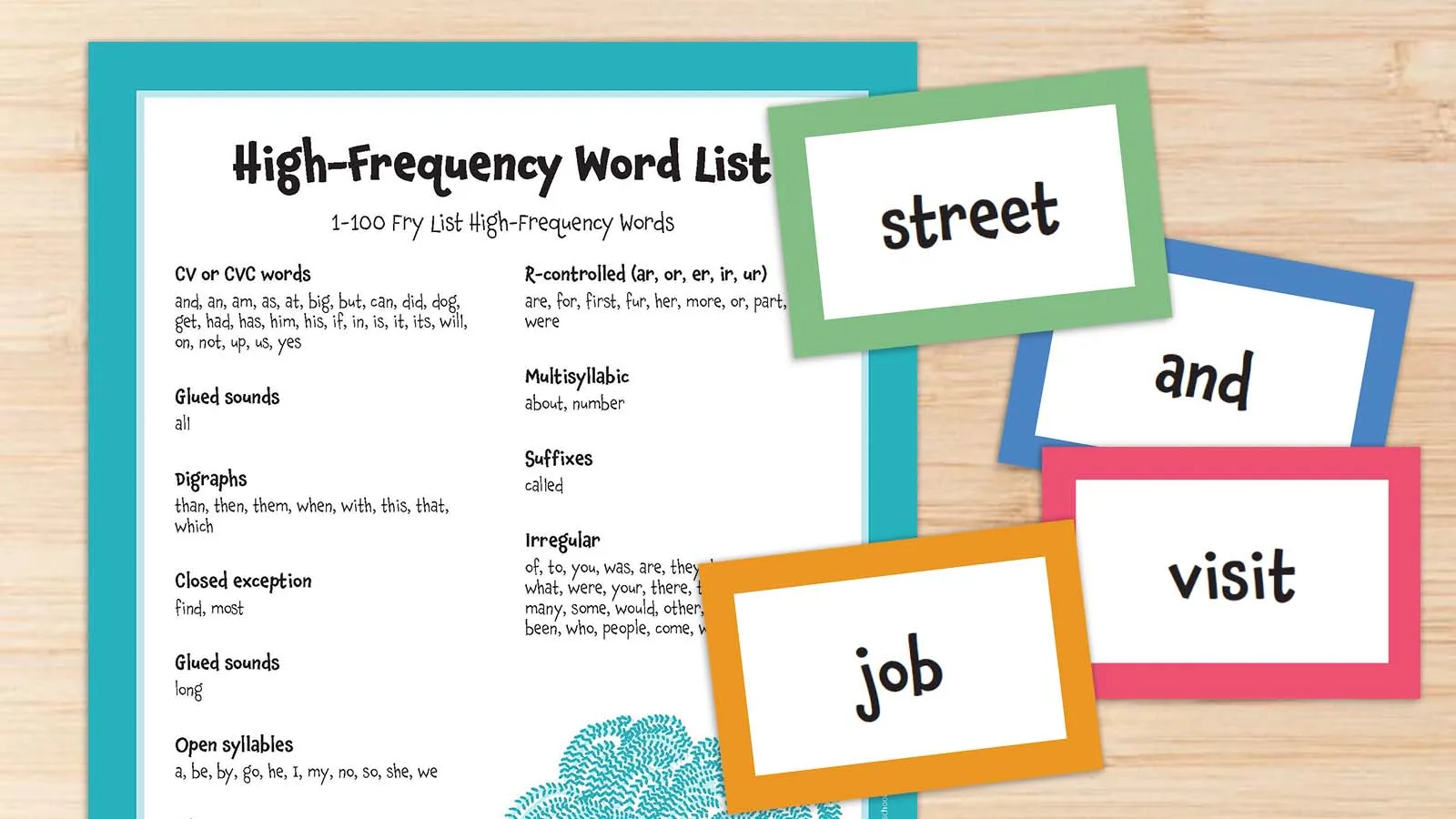
Restricting target vocabulary to the top 1,000 high-frequency words ensures beginners encounter language they will meet repeatedly across contexts, maximising return on learning effort. This approach suits self-study learners and classroom teachers who need measurable vocabulary milestones. The tradeoff is that high-frequency lists can feel decontextualised, so embedding words inside mini-dialogues or stories is essential for retention.
4. Intermediate Expansion - Open-Ended Discussion Prompts with Opinion Justification
Intermediate learners already have enough vocabulary to express a view; the gap is justifying it under conversational pressure. Replace yes/no questions with prompts that require a reason: "Which is more important, honesty or kindness? Why?"
This format forces learners to construct multi-clause responses spontaneously, which is the production challenge that builds fluency at B1 to B2 level. It also surfaces grammar gaps naturally, without a worksheet in sight. Parrot's AI Spanish Tutor is most useful here as an on-demand conversation partner, available during or after video sessions when a learner wants active, personalised practice on top of immersive content, rather than waiting for a scheduled class to get a speaking turn.
5. Intermediate Expansion - Timed Challenges and Beat-the-Clock Vocabulary Rounds
Adding a countdown timer to vocabulary recall or sentence-building tasks introduces productive pressure that mirrors real conversational pace, training automaticity at the B1–B2 stage. This modification works best in English learning activities where learners already know the target forms but need to deploy them faster. The tradeoff: timed formats can spike anxiety in learners with processing differences, so offering a 'no-timer' opt-out preserves inclusion.
6. Advanced Stretch - Formal Debate Format with Assigned Positions
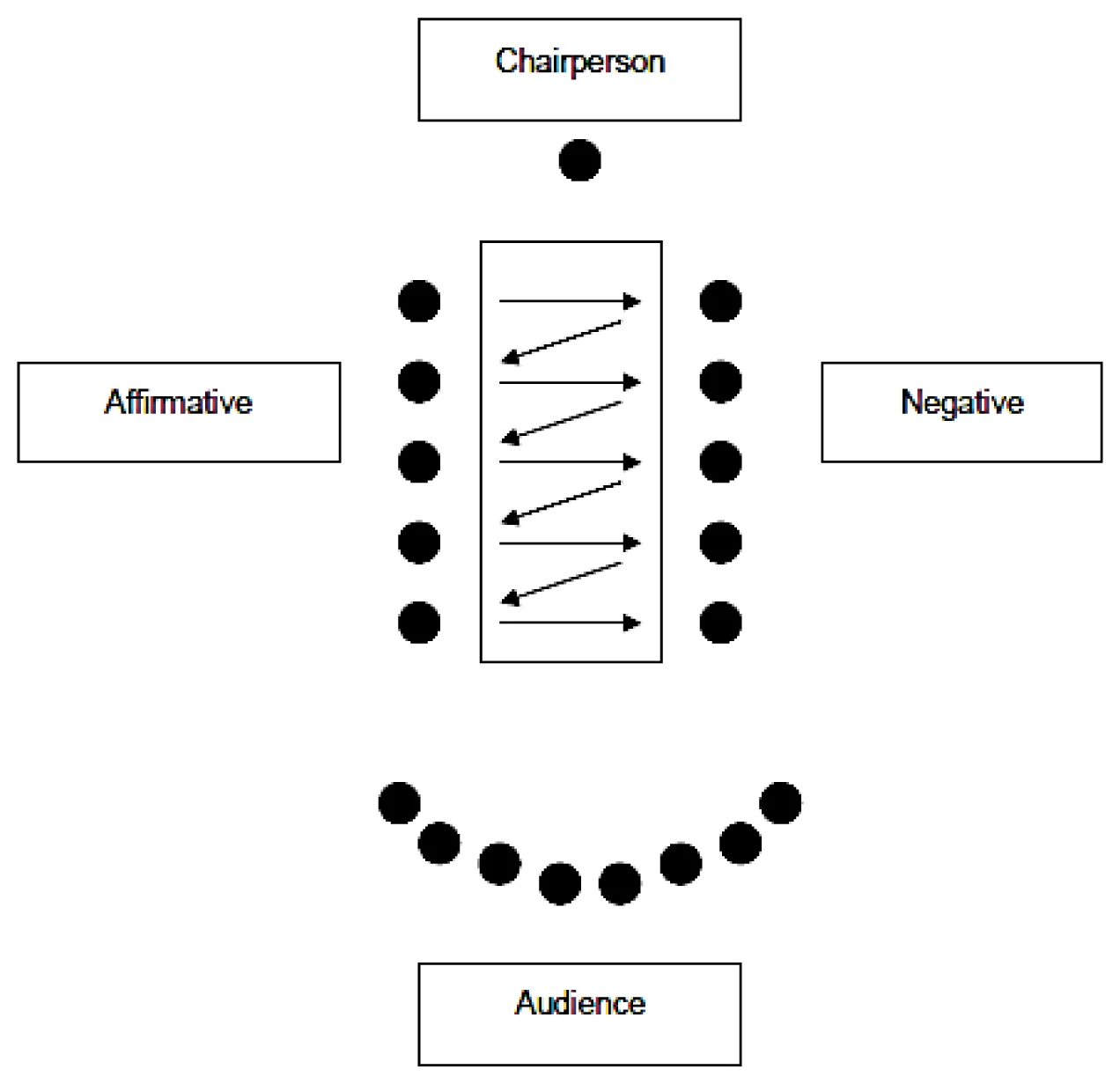
Assign positions learners disagree with personally. Arguing against their own view forces them to access vocabulary and syntax they would never choose voluntarily, which is where C1 and C2 growth lives. The formal structure (opening statement, rebuttal, closing) adds a layer of register awareness that open discussion rarely demands. Parrot's AI Spanish Tutor extends this into solo practice sessions; a learner can take an assigned position, construct their argument, and receive targeted feedback on the specific collocations and register gaps the exchange reveals. The limitation of the debate format itself: it requires a confident facilitator; without clear time management, it collapses into monologue.
7. Advanced Stretch - Unrehearsed Roleplay with Authentic Scenario Constraints
Dropping advanced learners into an unscripted roleplay, a job interview, a complaint call, a negotiation, with only a role card and no preparation time replicates the unpredictability of real English use. This is the defining stretch for C1+ learners who perform well in rehearsed tasks but struggle with spontaneous register shifts. The tradeoff: without a debrief focused on language form, learners may fossilise errors made under pressure.
8. Two Truths and a Lie - Scaled Across All Three Levels with Minimal Rule Changes
The same game runs at every proficiency band by adjusting one variable: sentence complexity. Beginners use single-clause statements ("I have a dog / I have a cat / I have a fish"). Intermediates add detail and justification.
Advanced learners use abstract or hypothetical statements that require careful listening to detect the lie. No extra materials, no parallel worksheets. This is the scalable-activity principle in practice: one rule-set, invisible difficulty gradient.
It also solves a persistent classroom problem: conversation question cards pitched at a single level tend to bore intermediate-high and advanced learners immediately, and creating parallel versions from scratch is a preparation burden most teachers don't have time for.
9. Mixed-Level Classroom Asset - Peer Scaffolding Through Intentional Group Pairing
Mixed-proficiency classrooms are the norm in ESL teaching, with a large majority of ESL teachers reporting multilevel classes as their standard reality. Intentional pairing, placing a strong B1 learner with a high A2, creates a natural i+1 dynamic: the stronger learner models language just one step ahead of the weaker learner's current level, which is precisely the condition Krashen's Input Hypothesis identifies as optimal for acquisition. The trade-off is that the stronger learner needs a genuine challenge elsewhere in the session, or they coast.
Parrot's short-form video feed, governed by the Comprehensible Input Method, sequences content to each learner's actual level automatically, giving the advanced learner a genuinely stretching input session while the beginner works through material calibrated to their band, inside the same platform rather than across three separate apps.
10. The i+1 Principle Applied to Short-Form Video - Comprehensible Input as the Primary Fluency Mechanism
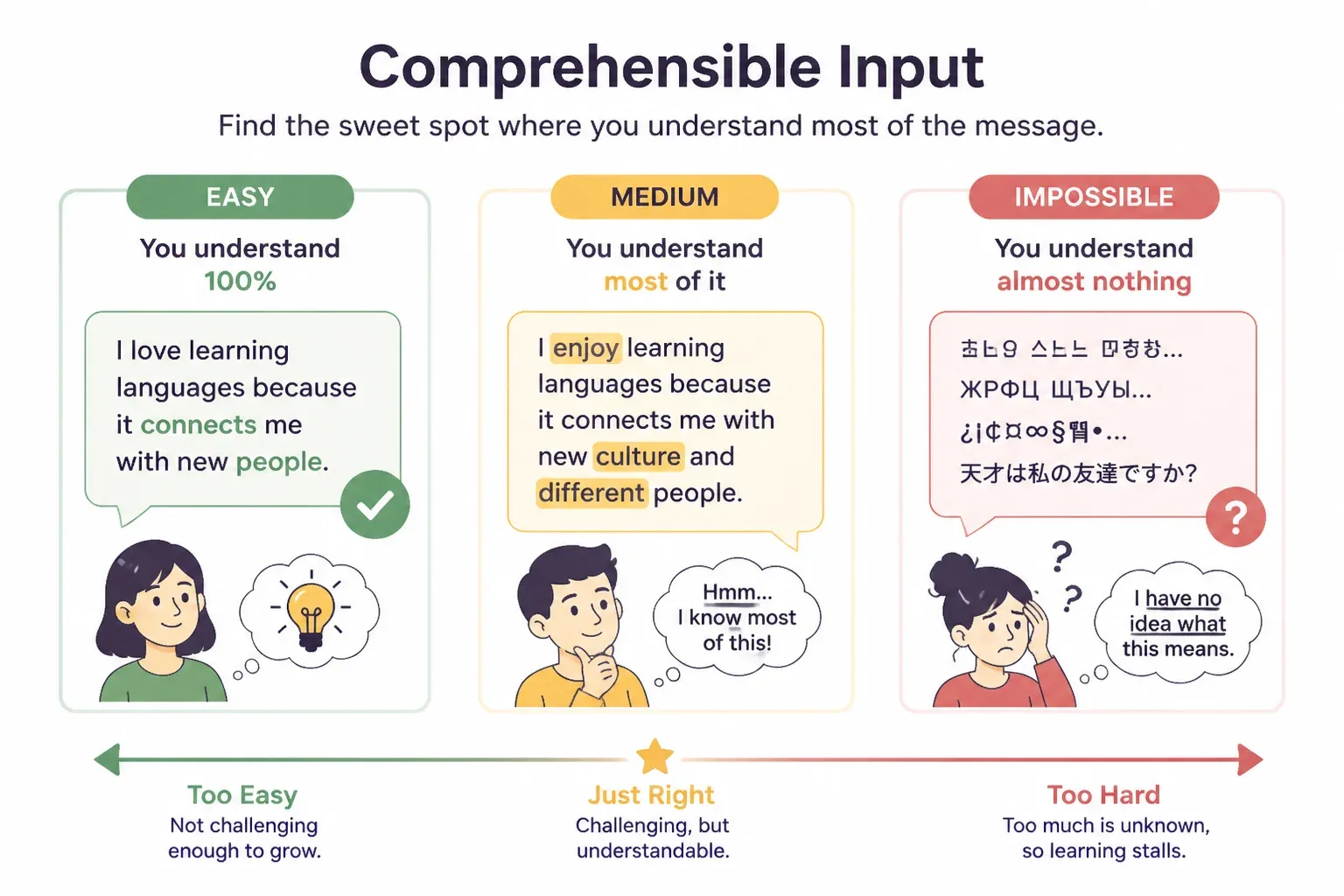
The most underexplored insight in English learning activities is that scroll-based short-form video consumption, TikTok, YouTube Shorts, Instagram Reels, can itself become the primary fluency-building mechanism when content is matched to the learner's comprehension level plus one step. Unlike discrete classroom exercises, this approach embeds acquisition inside behaviour learners already perform for hours daily, making exposure volume vastly higher than any structured curriculum can achieve. The tradeoff: without intentional content curation, learners default to native-speed, slang-heavy content that exceeds their processing level and produces frustration rather than acquisition.
11. Challenging the Structured-Exercise Assumption - Why Unstructured Comprehensible Input Outperforms Skill-Category Drills at Scale
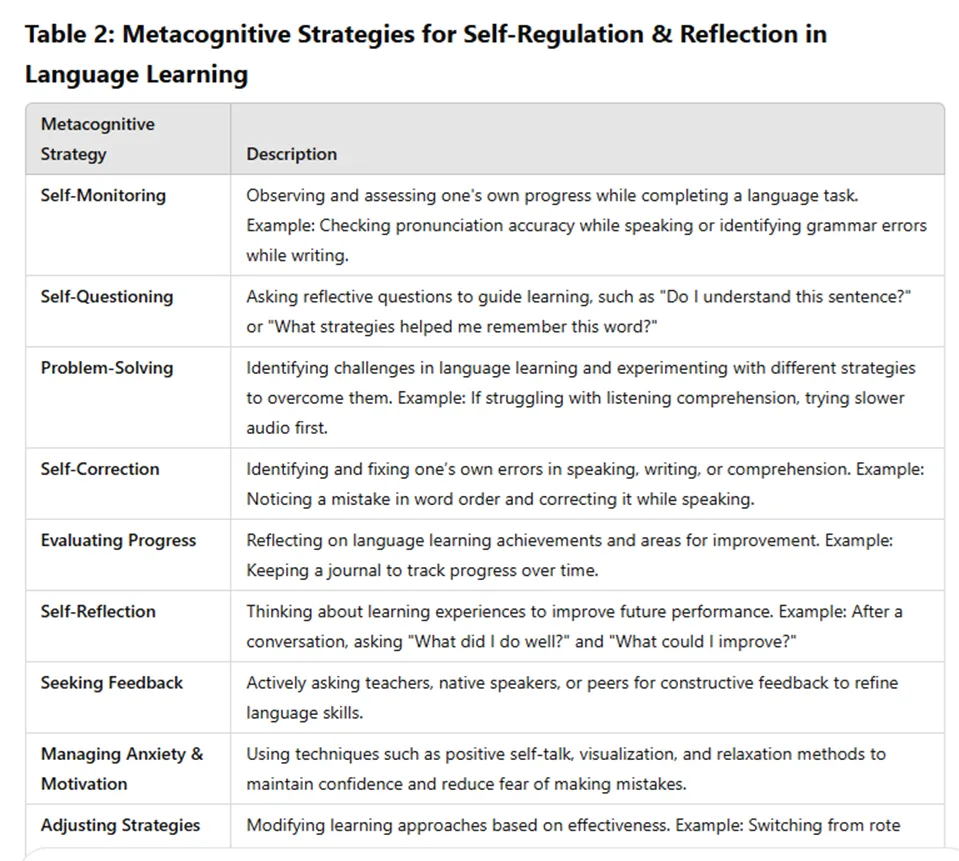
Most English learning activities curricula assume that discrete skill-category exercises, grammar drills, pronunciation tasks, writing frames, are the foundational unit of acquisition. Krashen's input hypothesis and subsequent corpus research suggest otherwise: learners who accumulate massive quantities of comprehensible input acquire grammar implicitly and outperform drill-focused peers on spontaneous production tasks. The practical implication is that teachers should treat structured activities as comprehension checks and confidence builders, not as the primary acquisition mechanism. The limitation: this reframe requires learners to tolerate ambiguity and delayed accuracy feedback, which conflicts with institutional assessment cultures.
12. Proficiency-Level Diagnostic Before Adaptation - The Three-Tier Placement Check
Before adapting a single activity, run a ten-minute three-task check: ask the learner to describe a picture (tests vocabulary range), follow a two-step spoken instruction (tests listening comprehension), and write three sentences about their week (tests syntax control). The output reliably sorts learners into beginner, intermediate, or advanced bands without a formal standardised test, giving you actionable differentiation data immediately. Parrot's built-in placement test covers the same diagnostic ground automatically, so learners who arrive overwhelmed by the sheer number of resources available, YouTube channels, grammar books, vocabulary apps, speaking platforms, get a single starting point rather than a stack of unanswered questions about where to begin.
Why Listening to Real English Every Day Beats Structured Drills for Building Fluency
Krashen's Acquisition-Learning Hypothesis draws a hard line: consciously learned grammar rules function only as an editor after the fact, never as the engine of spontaneous speech. Drills and worksheets, however well-levelled, produce learners who can pass a test and freeze in a conversation. The same principle applies to children: they acquire their first language through immersive, comprehensible exposure long before they ever see a conjugation table, and the learners who replicate that process as adults, consistent daily listening at a level they can mostly follow, build the subconscious language system that generates fluent speech.
The structured-exercise framework is not wrong; it is simply incomplete. Activities build familiarity with surface features. Comprehensible input, consumed consistently at the learner's real level, during a commute, over lunch, before bed, builds the subconscious system underneath.
Every activity in this list, from picture-word matching at A1 to unrehearsed debate at C2, is a tool, and tools require a skilled hand to wield at the right moment. The next section names the single habit that quietly outperforms every exercise on this list, and it's already built into how you spend your day.
The English Learning Habit That Outperforms Every Activity on This List
That ceiling is real, and most learners hit it without recognizing what stopped them. Piling on more structured activities past that point produces diminishing returns, not fluency.
The reason is mechanical. According to the Krashen Input Hypothesis, humans acquire language in one way: by understanding messages at a level just beyond their current ability. Drills build familiarity with surface features. They do not train your brain to produce language without a prompt, cue, or scaffolded task. That gap is why learners who have completed hundreds of exercises still freeze the moment a real conversation starts.

Why Activities Are the Warm-Up, Not the Workout
What activities cannot replicate is the experience of processing unscripted, meaning-driven language in real time. As Krashen's research notes, low-anxiety exposure integrated into daily routines produces better conversational outcomes than high-pressure drills, because a relaxed brain absorbs input rather than monitoring performance.
The 10-Minute Daily Input Habit That Compounds Faster Than Any Drill
Short and consistent beats long and occasional. The trade-off worth naming: passive input alone will not sharpen your ability to initiate speech. You still need low-stakes speaking practice layered on top.
Signs You Are Ready to Move Beyond Worksheets and Activity Sheets
When you can complete every task on a structured list without effort but still cannot hold a spontaneous conversation, the activities have done their job. What most learners and practitioners report is that consistent, low-effort exposure to meaningful language is the sustainable path to communicative competence once scaffolded tasks stop stretching the learner. The replacement is a different input diet entirely.
That is the opening Parrot was built for: teaching Spanish today, with French, English, and Italian coming soon, measuring whether you can hold a conversation rather than whether you kept a streak alive.
Next steps
If you have worked through speaking games, vocabulary drills, and listening tasks for months but still freeze the moment a real conversation starts, the path forward starts with a different input diet, not a longer activity list. Structured exercises build familiarity with English's surface features, but as the body of this post makes clear, retained vocabulary and retrievable vocabulary are two different things, and no game closes that gap without unscripted, meaningful exposure. Start with our learn Spanish.
The reason the freeze happens is mechanical. Speaking games and drills reward pattern-matching within a scripted task rather than spontaneous retrieval under unpredictable pressure, which means they rehearse the exact conditions real conversation never creates. Layered on top of that, listening activities only trigger genuine acquisition when the input is meaningful, slightly above the learner's current level, and consumed in a low-anxiety state. The moment evaluation or performance pressure enters, the affective filter rises and blocks the very acquisition the listening was supposed to trigger. Together, those two findings point to the same next step: high-volume, daily, low-stakes exposure to native-speed content your brain processes for meaning rather than for a grade.
Start with Parrot's short-form native video feed, which sequences level-appropriate content automatically so the comprehensible input condition is met from your first session. Add Parrot Back for speaking practice on top of that input, and the passive-to-active loop that structured activities alone cannot close starts closing on its own.
Frequently Asked Questions
Why do I keep freezing in real conversations even after months of studying?
The issue is structural, not effort-related. Structured drills build passive recognition of language patterns, but live conversation demands spontaneous retrieval and real-time processing, a fundamentally different skill. Completing activities proves you finished activities; it does not train the unpredictable demands of a real exchange.
Are there English speaking practice activities that don't require any materials?
Yes, Hot Seat Vocabulary Relay is one of the most effective no-materials classroom activities because it forces real-time word retrieval under mild social pressure, which mirrors actual conversation demands. Two Truths and a Lie also requires nothing beyond the speakers themselves and works for both children and adults.
What makes a speaking activity actually low-stress and fun instead of anxiety-inducing?
Activities that keep the affective filter low, meaning they prioritize finishing imperfect sentences over producing perfect ones, reduce the anxiety that blocks language output. Two Truths and a Lie works well here because the content is personally owned, which lowers that filter immediately.
What's wrong with rotating through speaking, grammar, and listening activities on different days?
The category-rotation model rewards completing activities, not building fluency, a learner can rotate through every skill box for months and still freeze the moment a real conversation starts. When no single activity is explicitly tied to a measurable fluency outcome, none of them reliably builds toward it.
Do roleplays actually help with real-world English speaking, or are they just classroom exercises?
Research on roleplay in adult ESL contexts consistently shows that scenario-based practice produces measurable real-world transfer when the scenario matches situations learners actually face. The key caveat is that scripted versions kill the benefit, the roleplay only builds fluency when one role is allowed to improvise, forcing the other speaker to handle unexpected responses.